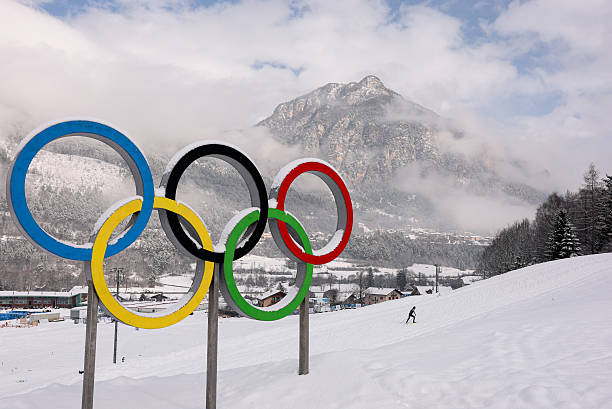
There is a long-standing belief in sports that the games should exist separately from the world around them, especially when it comes to politics. The Olympics, in particular, has built much of its brand identity around this idea; a neutral space where athletes from every nation compete on equal terms, regardless of what is happening beyond the stadium walls. In practice, that separation has never been clean, and the organizations responsible for managing major international sporting events are increasingly forced to navigate the tension between neutrality and a world that rarely stays quiet.
The Myth of the Apolitical Event
Deciding which issues are considered political and which are not, and who gets to make that call, is an exercise of institutional power. When a sports organization tells an athlete that their message does not belong on the field of play, they are making a political choice, even if they frame it as “policy compliance”.
This is not a new challenge. From Tommie Smith and John Carlos raising their fists at the 1968 Mexico City Olympics to Colin Kaepernick’s national anthem protest — which I explored earlier on this blog in the context of Nike’s response — athletes have consistently used their platforms to call attention to issues that matter to them. The basic framework of what is now known as Rule 50 was introduced in the 1975 Olympic Charter, prohibiting every kind of demonstration or propaganda whether political, religious or racial in Olympic areas. This language was widely interpreted as a direct response to the protests for racial justice by Black athletes at the 1968 and 1972 Games. Sports organizations have been navigating the tension between Rule 50 and athlete activism ever since. Time
The Communications Challenge
From a PR standpoint, political controversy at major sporting events creates a specific kind of crisis that is difficult to manage cleanly. Unlike a doping violation or a scheduling failure, political situations often involve genuinely competing morals and values. There is rarely a response that satisfies everyone.
Sports organizations typically respond in one of three ways. The first is strict policy enforcement — applying existing rules consistently and letting the policy do the communicating. The second is negotiated compromise — working with the athlete to find a middle ground that allows the event to move forward. The third is public acknowledgment — stepping outside of policy language to speak to the human dimensions of a situation, even when the institutional outcome stays the same.
Each approach carries risk. Strict enforcement can appear cold and out of touch when the underlying issue resonates with the public. Negotiated compromise can feel inconsistent if not handled carefully. Sports inclusion expert Yannick Kluch has noted that one of the major critiques of Rule 50 globally is that athletes simply do not know what the consequences of protest will be, and that inconsistent enforcement by the IOC compounds that problem significantly. Public acknowledgment, done poorly, can come across as agreeing with the message while penalizing the messenger. NPR
Why It Matters
The way a sports organization handles a controversial political moment reveals a lot about its values and its understanding of its audience. In an era when athletes have massive independent platforms and fans are increasingly concerned with institutional accountability, responses that feel bureaucratic or tone-deaf tend to generate significant backlash. The organizations that tend to come through these situations with their credibility intact are the ones that communicate with transparency and demonstrate that their decisions are grounded in principle rather than convenience.
The Milano Cortina 2026 Winter Olympics offered one of the most striking recent examples of exactly this challenge, and how difficult it is to get right. Read about it in my next post!


Leave a Reply